

You’ve walked into a room that just felt right.
But you couldn’t say why.
That’s not luck. It’s not magic. It’s architecture and interior design speaking the same language (slowly,) deliberately, from day one.
Most people treat them like separate jobs. Like architecture is the shell and interior design is the furniture you shove in later. (Spoiler: that’s why so many spaces feel off.)
I’ve watched this mistake ruin good projects for twenty years.
What to Learn About Architecture Kdainteriorment isn’t about theory. It’s about how form and function lock in before the first wall goes up.
You’ll get real examples. Not fluff. Not jargon.
Just the exact insight you need to stop fighting your space. And start building with it.
Architecture Is the Bones of Your Life
I don’t mean that as a metaphor. I mean it literally. Architecture is the skeleton you live inside (before) paint, before furniture, before your favorite rug.
It decides how light hits your face at 7 a.m. It controls whether you bump into your partner in the hallway. It makes you feel small in a cathedral or cramped in a room with 7-foot ceilings.
Light and shadow? That’s not decoration. That’s architecture.
A window placed high on the wall throws light deep into a room. A row of floor-to-ceiling glass floods everything (but) also turns your living room into a fishbowl. I once sat in a kitchen where the only window was a narrow slit above the sink.
Felt like cooking in a bunker. (Not joking.)
Flow and circulation? That’s how you move (or) get stuck. Open-plan layouts let sound and people spill across rooms.
Great for parties. Terrible if you work from home and your kid’s TikTok dance practice echoes through your Zoom call. Closed-off rooms give quiet.
They also force you to walk past three doors just to get water.
Volume and scale? Try standing in a room with 12-foot ceilings and bare walls. Then try the same in a 6.5-foot ceiling bedroom.
One feels like breathing. The other feels like sleeping in a shoebox. (Yes, I measured.)
What to Learn About Architecture Kdainteriorment starts here (not) with finishes or swatches, but with these bones. Kdainteriorment digs into how those choices shape real daily life.
Ceiling height changes your posture. Door placement changes your patience. Window size changes your mood before coffee.
Bones Need a Soul (Not) Just Decor
Architecture gives you walls and ceilings.
Interior design gives you a place to breathe.
I’ve walked into stunning buildings that felt cold and empty. Like walking into a skeleton wearing a tuxedo. (Nice suit.
No pulse.)
What to Learn About Architecture Kdainteriorment starts here: human scale and ergonomics. Not just what fits, but how it feels to sit, reach, stand, or lean. A dining table 30 inches high works.
A dining table 28 inches high makes your elbows ache after five minutes. I moved my desk three inches forward last month. My lower back stopped yelling at me.
Materials aren’t just finishes. They’re texture you feel before you see them. A rough-hewn oak beam softens sharp concrete.
A brushed brass pull warms up a minimalist cabinet. Cold marble floors? Add a thick wool rug (not) for looks, but because bare feet on stone at 6 a.m. is a mood killer.
Color doesn’t float in space. It lives in light. North-facing rooms swallow warm tones.
South-facing ones fry cool ones. I painted a hallway sage green once. It looked muddy until I swapped the bulbs from 2700K to 3000K.
Instant lift.
You don’t “decorate” a room. You tune it. Like adjusting bass and treble until the music stops fighting the room and starts filling it.
Zones aren’t drawn on paper. They happen when you pull two chairs close and add a lamp between them. That’s how conversation zones form.
Not with tape. With intention.
Don’t chase trends. Fix the chair height first. Then the light.
Then the color. Everything else follows. Or fails.
Architecture and Interior Design: It’s a Conversation
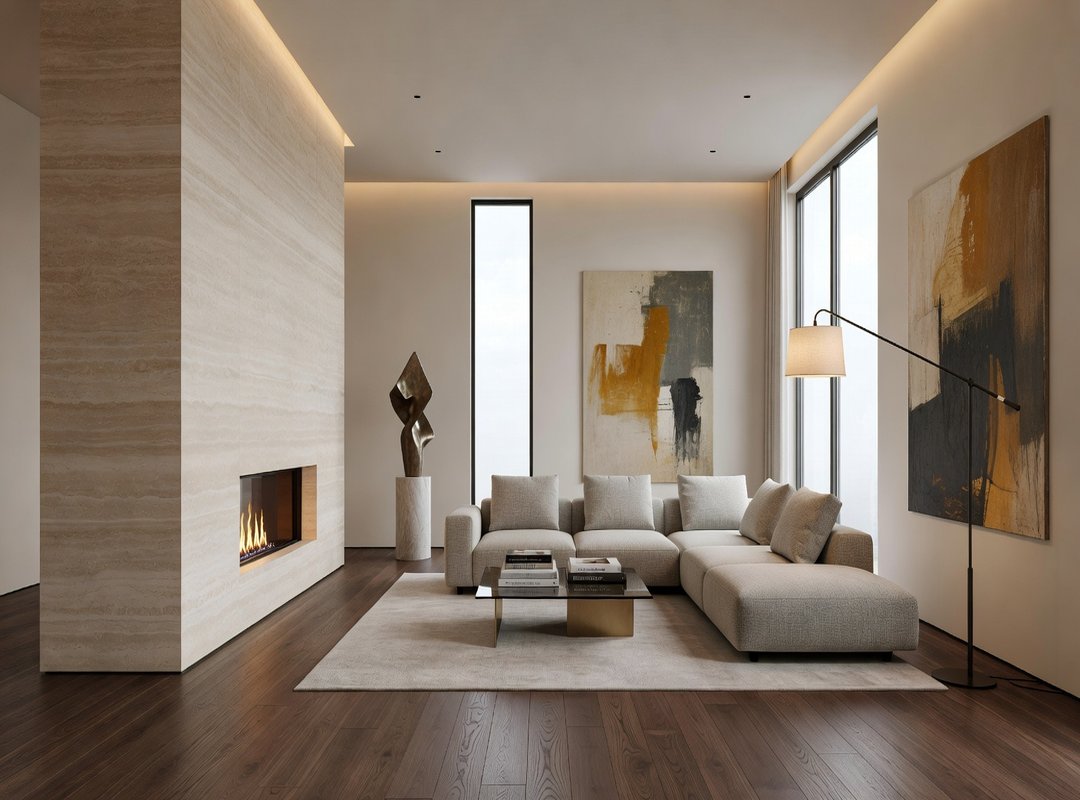
Not a handoff. Not a relay race. A real back-and-forth.
I wrote more about this in this article.
I’ve watched too many projects fail because the architect handed off blueprints like a receipt. And the interior designer treated them like scripture.
They’re not separate acts. They’re one act with two speakers.
What happens when the architect puts a floor-to-ceiling window exactly where the sofa should go? You get glare. You get squinting.
You get someone moving the couch three times until it almost works.
That’s not design. That’s compromise dressed up as collaboration.
The outlet and the lamp? Same thing. If the reading nook isn’t on the architect’s radar by week two, you’ll get a switch behind the bookshelf.
Or worse, a cord snaking across the rug.
I’ve seen it. Every time.
Material echo is where it gets real. Take exterior stone cladding. Use that same stone on an interior accent wall.
Instant cohesion. No explanation needed. Just yes.
(Pro tip: Source the stone early. Don’t wait for finish selections.)
Now picture a kitchen. The interior designer knows the work triangle. Sink, stove, fridge (must) be tight and logical.
But if the architect already locked in wall locations before that conversation? You get a fridge wedged beside a load-bearing column. Or a sink under a window with zero cabinet space above.
That’s not planning. That’s guessing with consequences.
So what do you actually need to know?
What Makes Architecture Unique Kdainteriorment lays this out plainly.
Start here: What to Learn About Architecture Kdainteriorment isn’t about memorizing terms. It’s about understanding who talks first (and) how often they talk after that.
You don’t need more software. You need better conversations.
And you need them early.
Every time.
When Design and Architecture Stop Talking
I’ve seen it happen too many times.
A room looks amazing in renderings. Then you walk in and feel lost.
That’s the Floating Room. No columns. No ceiling drop.
You try to place furniture. Nothing feels right. You second-guess every decision.
No visual anchor. Just open space screaming for direction.
Then there’s the Wasted Feature. A gorgeous curved wall (stunning) in the plans (but) zero thought given to what goes inside it.
So you end up with a shelf that doesn’t fit, or a sofa that floats awkwardly, or worse: dead space you can’t use.
This isn’t just annoying. It’s expensive. And avoidable.
What to Learn About Architecture Kdainteriorment starts with asking one question early: How will people actually live here?
If your architect and interior designer aren’t in the same room (or at least on the same page), you’re setting yourself up for trouble.
For real-world examples of how this works (or) fails. Check out Kdainteriorment Architecture Design by Architects.
Your Space Should Feel Like Home. Not a Compromise
I’ve been there. You pick perfect tiles. The lighting is spot-on.
Yet the room still feels off.
That’s not your taste failing you. That’s architecture and interior design working against each other.
Disjointed spaces don’t feel right because they weren’t built to. They were patched together.
The fix isn’t more finishes or fancier furniture. It’s starting earlier. With What to Learn About Architecture Kdainteriorment.
Ask yourself: What feeling do I want when I walk in? What must this space do every day?
Let that answer drive both the walls and the couch.
Most people wait until drywall is up to think about flow. That’s backwards.
You already know what’s missing. You just need permission to lead with it.
So grab a notebook. Write down one feeling and one function. Right now.
Then design from that. Not around it.
Your next project starts there. Not with a floor plan. With a pulse.