

I bet you’ve stared at a ziggurat photo and thought: How did we get from that to the Guggenheim?
Not just the look of it. The why behind it.
Most architecture history reads like a fashion show. Styles change. Colors shift.
Big deal.
But real change happens when stone cracks under weight. When steel arrives. When people stop wanting temples and start needing schools.
That’s what this is about.
How Architecture Has Changed over Time Kdainteriorment isn’t about memorizing dates or names.
It’s about seeing how each era solved actual problems. Heat. Crowds.
War. Faith. Money.
I’ve studied more than 50 landmark buildings. Six continents. Five thousand years.
Not just photos. Blueprints. Construction records.
Trade logs. Even weather data from the time.
You’ll see why Roman concrete lasted while Greek marble cracked. Why Gothic vaults needed flying buttresses (and) why today’s algorithms skip them entirely.
This isn’t theory. It’s cause and effect.
You’ll walk away knowing exactly why architecture shifted (not) just that it did.
No fluff. No jargon. Just the real forces behind every curve, column, and cantilever.
Ready to trace the logic (not) just the lines?
Ancient Foundations: Mud, Myth, and Muscle
I build things. I’ve hauled bricks. I’ve watched mortar crack in desert sun.
Mudbrick wasn’t just cheap. It baked into the shape of Mesopotamian temples. Soft.
Impermanent. So they built tall, narrow, with thick walls and few windows. No flying buttresses here (just) gravity and patience.
Egyptian limestone? Heavy. Precise.
Cut to fit like teeth. That’s why pyramids point skyward. axial progression wasn’t a design choice. It was cosmology made stone.
The dead had to walk straight toward Ra.
Greek marble? Cold. Reflective.
Carved thin. You couldn’t span wide spaces with it. So columns held up everything.
And ornamentation was structure. No hiding behind plaster.
Then Rome showed up with concrete. Not fancy stuff. Just volcanic ash, lime, water.
They poured it. They arched it. They domed it.
The Pantheon’s dome? Unreinforced. 142 feet across. Still standing.
Because Roman labor wasn’t just workers (it) was conscripted engineers, enslaved surveyors, and state-run quarries.
When the empire fell, that system vanished. Not the tools. The organization.
You can’t pour concrete without coordination.
That’s why later builders went back to post-and-lintel. Simpler. Safer.
Slower.
Kdainteriorment deals with how those old limits still echo in modern space planning.
How Architecture Has Changed over Time Kdainteriorment isn’t about style shifts. It’s about what the ground, the gods, and the gangs of laborers would allow.
No magic. Just mud. Myth.
Muscle.
Medieval to Renaissance: When Geometry Got Human
I used to think Gothic cathedrals were just about reaching God.
They weren’t. They were about control. Control of stone, light, and weight.
Flying buttresses weren’t poetic. They were math made visible.
Then Brunelleschi looked at the Florence Cathedral dome and did something wild.
He didn’t just build it. He measured it. Surveyed it.
Applied Euclid like a carpenter uses a square.
That dome? It fused medieval craft with Renaissance geometry. No divine guesswork.
Just angles, chords, and repeated verification.
Vitruvius came back from the dust. Not as scripture (but) as a manual.
Patronage shifted too. The Church wanted awe. Merchants wanted legibility.
Symmetry. A floor plan you could read, not just kneel in.
Chartres Cathedral’s plan is a theological diagram. Irregular. Asymmetrical.
Sacred geometry bent to liturgy.
Santa Maria Novella? Alberti laid it out on a grid. Proportions you could calculate.
You could walk into it and feel the ratio.
That shift (from) divine proportion to human-centered geometry (is) the clearest proof of how architecture changed over time.
Human-centered geometry meant buildings answered to people first.
Not doctrine. Not dogma. Not even height.
How Architecture Has Changed over Time Kdainteriorment isn’t some vague trend. It’s measurable. Chartable.
Built into brick and mortar.
I’ve stood in both churches. One makes you look up. The other makes you pause (and) understand.
Steel Glass War: Why Buildings Got Naked
I watched Blade Runner 2049 and thought: that’s not sci-fi. That’s just the Bessemer process on loop.
Bessemer steel made skeletons strong enough to punch skyward. Plate glass turned walls into light traps. Elevators killed the tyranny of stairs.
Suddenly, density wasn’t just about cramming people in. It was about stacking daylight, air, privacy (or lack thereof).
The 1851 Crystal Palace? Not a building. A flex.
Prefab iron + glass = honesty as policy. No fake stone. No hidden structure.
Just bolts and light. (And yes, it burned down later. Irony noted.)
Early modernists didn’t ditch columns because they forgot history. They dropped them because war broke something in them. Mies said less is more.
Le Corbusier called a house a machine for living in. Cold, precise, functional. He meant it.
That manifesto shaped floor plans: open, no load-bearing walls. Windows stretched wall-to-wall. Materials were raw concrete, steel, glass.
No ornament. Ornament felt like lying.
How Architecture Has Changed over Time Kdainteriorment isn’t just about style shifts. It’s about trauma, tech, and refusing to decorate pain.
If you’re designing today. And care how space shapes behavior. You’ll see this lineage everywhere.
Even in Kdainteriorment Architecture Design.
I still flinch when I see a fake marble column on a glass tower.
It’s not bad taste. It’s betrayal.
Postmodernism to Parametricism: When Buildings Started Thinking
Postmodernism wasn’t about jokes. It was a slap in the face to modernist boredom.
I remember walking past those gray boxes in Chicago. Soulless, uniform, pretending austerity was virtue. Postmodernism brought back color.
Storytelling. Quoting old columns like they mattered (they did).
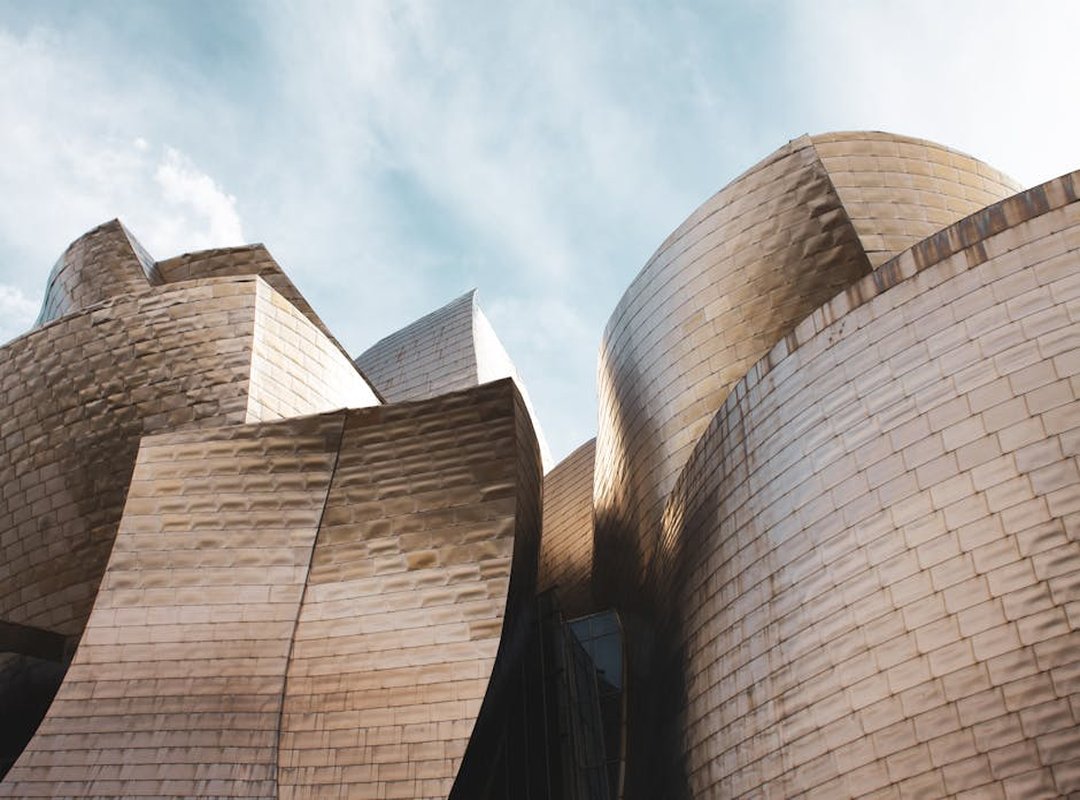
Then came Gehry’s Guggenheim Bilbao. That building shouldn’t exist. Not really.
He used CATIA. Software built for fighter jets. To bend titanium like paper.
That shift changed everything. Tools stopped being just helpers. They became co-authors.
Parametric design isn’t decoration. It’s math responding to real conditions: sun angles at 3 p.m. in July, wind pressure on the southeast facade, how much weight that beam can carry before it groans.
Zaha Hadid’s curves flow like liquid concrete. Kengo Kuma stacks wood like a monk building a shrine. Same era.
Opposite answers.
One leans into computation. The other leans into grain, texture, breath.
Globalization didn’t flatten architecture. It split it.
You see this tension everywhere right now (from) Dubai’s mirrored canyons to Kyoto’s bamboo lattices.
How Architecture Has Changed over Time Kdainteriorment isn’t just about style. It’s about what we prioritize when the ground shakes and the grid flickers.
Pro tip: If you’re sketching a roof, ask what data lives there. Not just what does it look like.
We stopped drawing buildings. We started negotiating with physics.
Today’s Crosscurrents: Carbon, Access, and AI
I used to think sustainability meant adding solar panels.
Now I know it starts with embodied carbon accounting (measuring) the CO₂ baked into every brick, beam, and bolt.
Inclusive accessibility? It’s not just ramps and braille signs. It’s designing for neurodiversity, aging bodies, and cultural context (way) beyond code minimums.
Climate-responsive envelopes aren’t fancy jargon.
They’re walls and roofs that breathe, shift, and shade with the weather (not) against it.
AI isn’t replacing architects. It’s doing the heavy lifting on site analysis and energy modeling so we can prototype faster and test smarter. Generative design isn’t magic (it’s) math that finds solar gain sweet spots humans miss.
The Edge in Amsterdam cuts energy use by 70% using IoT sensors and adaptive systems. That’s not futuristic. That’s built.
That’s real.
Adaptive reuse isn’t a trend. It’s cheaper. It’s faster.
It’s 30. 50% lower carbon than new construction. Period.
How Architecture Has Changed over Time Kdainteriorment is obvious if you look at what gets built (and) what gets kept.
Check out Kdainteriorment for how interior practice reflects this shift.
Architecture Is a Conversation. Not a Textbook
I used to think history was about dates. Then I stood under a Gothic vault and felt the weight of fear. And faith.
That built it.
How Architecture Has Changed over Time Kdainteriorment isn’t about memorizing styles. It’s about asking: *What broke? What burned?
What needed shelter, power, or dignity?*
Roman concrete solved collapse. Steel frames answered the hunger for height. Today’s mass timber fights climate debt.
Every shift came from pressure. Not preference.
You walk past buildings every day that hold those answers.
So pick one. Just one. The coffee shop.
The library. The apartment block. Look up its build year.
Find its main innovation. Then ask: What problem did it solve?
That question changes everything.
Architecture doesn’t reflect culture. It negotiates it, one beam, brick, or algorithm at a time.