
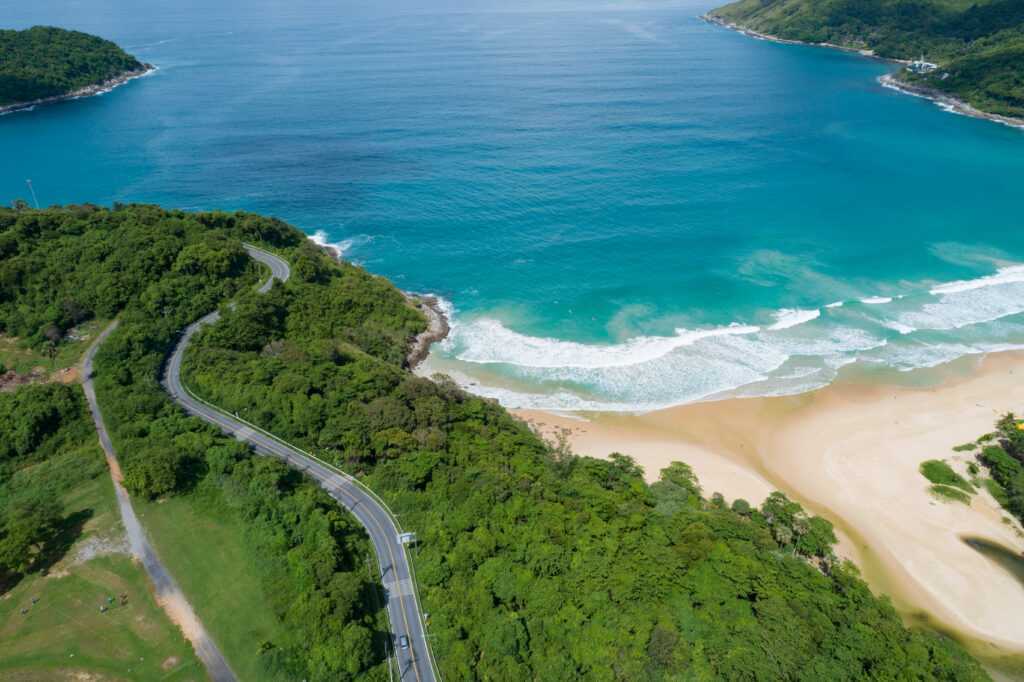
There is a road on Phuket’s west coast that local agents refer to simply as the Mile. It runs along the headland between Kamala Beach and Patong, clinging to dramatic cliffs above the Andaman Sea. In the 1980s, Amanpuri — the first Aman resort in the world — opened on this headland and quietly established one of Asia’s first addresses for ultra-high-net-worth property buyers. Andara followed. Then the Intercontinental. Then MontAzure.
Four decades later, the Millionaires’ Mile is no longer emerging. It is established, globally recognized, and — critically — almost out of land. That last point is what is driving serious investor attention in 2025 and 2026.
This guide breaks down what makes Kamala and the Millionaires’ Mile a compelling property investment today, who is buying, what the yield and appreciation data looks like, and what international buyers need to understand before approaching this market.
What Is the Millionaires’ Mile?
The Millionaires’ Mile is the stretch of Phuket Road 4233 that runs along the cliffside headland between Kamala Beach to the north and Patong to the south. The road itself is only a few kilometres long, but the properties along and above it represent some of the most expensive real estate in Southeast Asia.
The terrain is the story. The headland rises sharply from the sea, creating dramatic cliff-edge positions with uninterrupted 180-degree views of the Andaman Sea and its sunset silhouettes. Those positions are finite — once built on, they are gone. Combined with Phuket’s coastal zoning regulations (which restrict building height, coverage ratios, and development density on hillside and coastal land), this topography creates a structural supply ceiling that simply does not exist in most Asian resort markets.
The Mile borders Kamala to its north, which gives properties here dual-identity access: the exclusivity and privacy of clifftop living, plus the practical amenities of Kamala village — Café del Mar beach club, HQ Beach Lounge, the Intercontinental resort, local restaurants and markets — within a five-to-ten-minute drive. Patong, with its shopping, nightlife, and hospital infrastructure, is 10–15 minutes south.
“Kamala has very limited developable land due to hills and national park boundaries. Supply is thin, prices are high, and this constraint is not going away.” — MORE Group Phuket Property Market Outlook 2026
The Supply Constraint Thesis: Why Scarcity Is the Investment Case
Most property investment arguments lean on demand. Kamala’s case leans more heavily on supply — specifically, the absence of it.
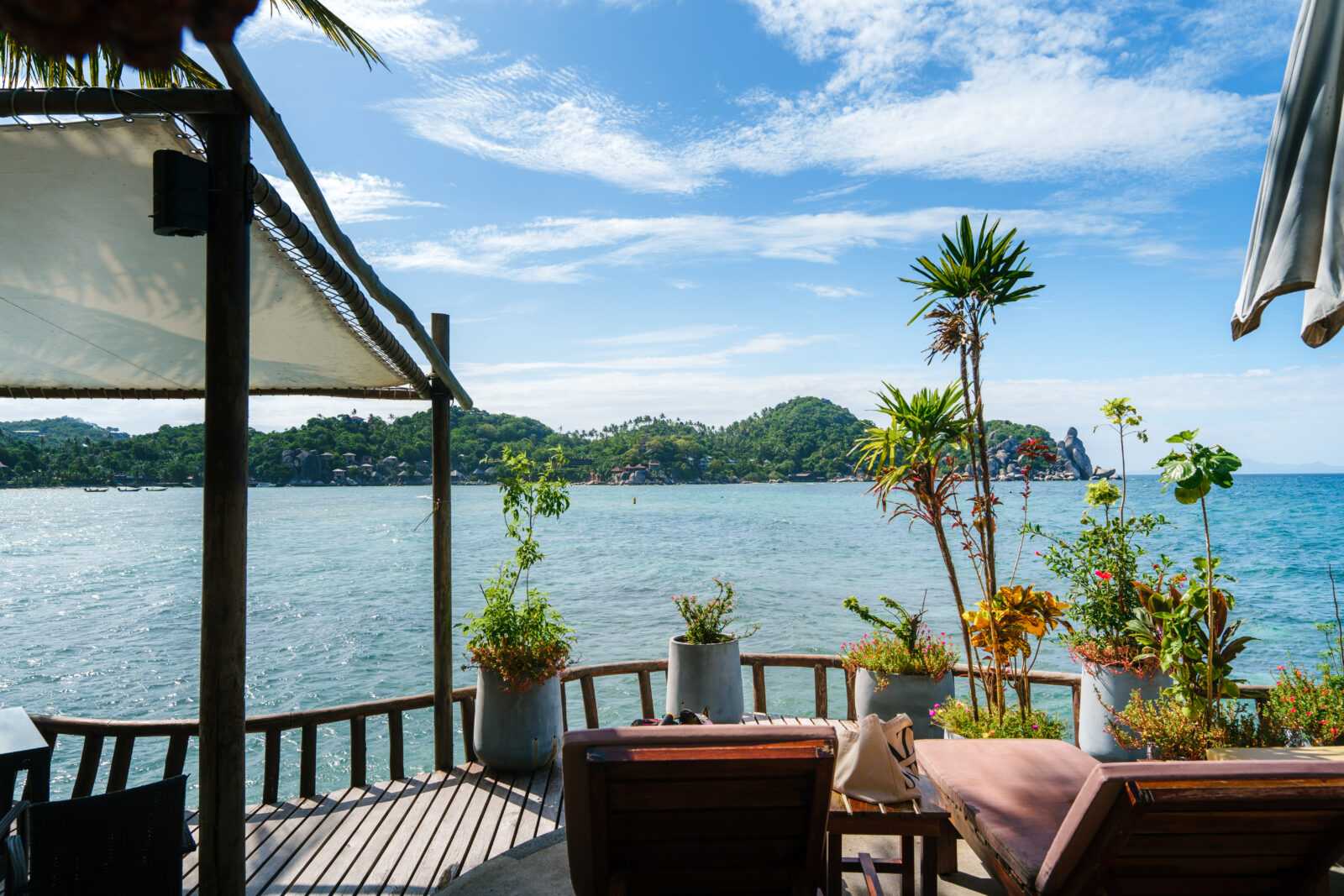
Across Phuket, new villa launches fell 41.5% year-on-year in 2025 as developable land in prime areas became increasingly scarce. Construction costs rose 8–12% in the same period due to material and labour inflation, further constraining what can be economically built. In Kamala specifically, what little land remains along the headland is either already developed, privately held at prices that only institutional buyers can justify, or inside national park boundaries that permanently restrict construction.
The result: while Bang Tao and Cherng Talay continue to absorb new condo and villa supply across multiple large-scale projects, Kamala’s pipeline is thin. According to the MORE Group’s 2026 market outlook, premium villa and boutique condo projects in Kamala command serious premiums and hold value well — precisely because the next comparable product is not coming anytime soon.
For buyers who understand property cycles, this is the clearest signal the market sends: when supply cannot respond to demand, prices move in one direction.
What the Numbers Show
The macro data supports the thesis. Here is what the Kamala and broader Phuket luxury market looked like through 2024–2025:
| Metric | Data point |
|---|---|
| Kamala villa price growth (2024) | 12–18% year-on-year appreciation |
| Gross rental yield — Kamala villas | 7–12% annually (well-managed properties) |
| Foreign buyer share — Kamala high-end market | Over 60% of new high-end purchases |
| Entry price — Kamala villas | THB 18–35M ($500K–$970K) at entry level |
| Millionaires’ Mile — premium estates | US $5–10M+ for clifftop villas |
| New villa supply launched island-wide 2025 | Down 41.5% year-on-year |
| Phuket international arrivals H1 2025 | 2.77M passengers, +5.6% year-on-year |
Sources: Kamala real estate market data via oceanwwp.com; Phuket.net 5 Reasons Phuket Property Remains Top Choice 2025; MORE Group Phuket Market Outlook 2026; skhai.com Phuket Property Market 2026
The rental yield figure deserves some unpacking. The 7–12% gross annual yield for Kamala villas sits at the top end of what Phuket delivers — higher than the island-wide condo average of 5–7%, and significantly above what most comparable luxury markets in Bali, Koh Samui, or even some Southern European destinations return. The reason is a combination of the premium nightly rates that cliffside and sea-view properties command (THB 150,000–400,000 per month for prime villas) and the year-round demand that comes from a property market increasingly driven by lifestyle buyers rather than pure tourism seasonality.
Why Kamala Specifically, Not Just Phuket
Kamala occupies a position on the value-and-prestige spectrum that is genuinely difficult to replicate elsewhere on the island. Here is how it compares to its nearest neighbours:
| Factor | Kamala / Millionaires’ Mile | Surin | Bang Tao / Cherng Talay |
|---|---|---|---|
| Supply pipeline | Very limited — land nearly gone | Limited — boutique only | Active — multiple large projects |
| Price appreciation (2024) | 12–18% YoY villas | 10–18% YoY villas | 15%+ villas; 7–10% condos |
| Gross rental yield | 7–12% (well-managed villas) | 5–7% (boutique, quieter) | 6–8% condos; 5–7% villas |
| Character | Dramatic cliffs, privacy, luxury anchors | Calm, understated, residential | Lifestyle corridor, family-oriented |
| Entry price (villa) | THB 18–35M+ | THB 25M+ | THB 14–25M (varies widely) |
| Buyer profile | HNW/UHNW: Europe, Middle East, US | Long-stay expats, retirees | Expats, families, investors |
Kamala’s key differentiator is that it delivers both — yield and capital growth — in a market where supply genuinely cannot scale. Bang Tao provides better liquidity and more product choice; Surin provides prestige with quieter yields. Kamala sits between them, offering the premium lifestyle positioning of the Mile with rental performance that Surin’s more sedate market does not match.
The Anchor Developments That Set the Standard
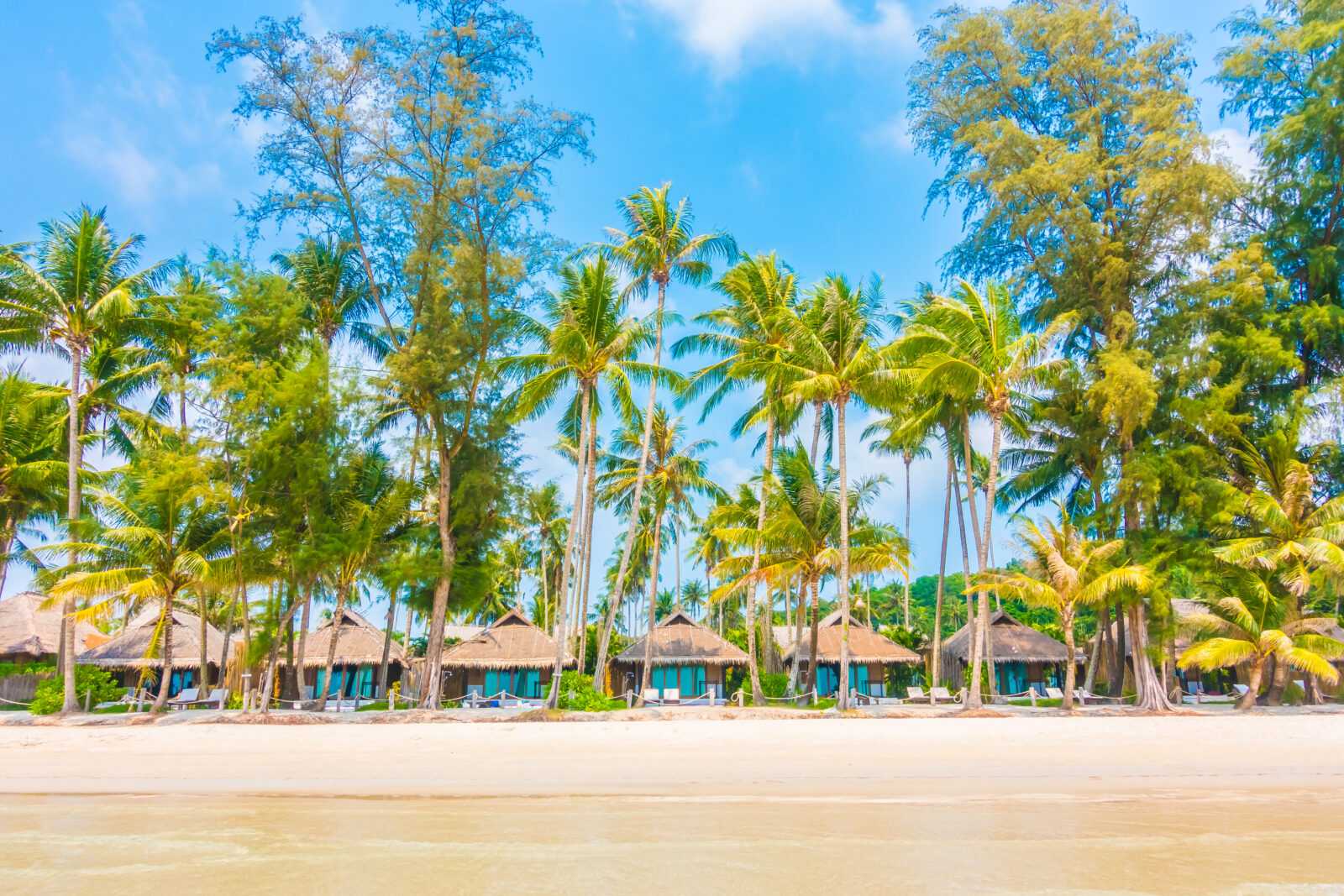
What gave the Millionaires’ Mile its name — and sustained it — is the quality of its anchor properties. Understanding what these developments established helps explain the pricing floor for everything that follows.
Amanpuri
Amanpuri, which opened in 1988 on the Kamala headland, was Aman’s first resort worldwide and effectively created the template for ultra-luxury Asian resort living. The 40 individual Thai pavilions and 30 private villas, each with its own pool and sea views, set a benchmark for design and privacy that drew a global clientele. It remains one of the most expensive resort addresses in Thailand, with villa sales on this headland tracking into the tens of millions of dollars.
Andara Resort and Villas
Andara, perched directly above the Millionaires’ Mile road, offers private pool villas with panoramic Andaman views and five-star hotel services. Its branded residence model — where owners access hotel amenities and rental management while occupying their own villas — became one of the early Phuket examples of the structure now standard across the island’s luxury market.
MontAzure and the InterContinental
The MontAzure development — a joint venture between Arch Capital (Hong Kong), Pontiac Land (Singapore), and The Narai Group (Thailand) — represents the most recent large-scale project to break ground on one of the last sizable beachfront land plots in Kamala. Spanning 73 hectares across mountainside to beach, it incorporated Twinpalms Residences (75 freehold and leasehold condominiums), The Estates at MontAzure (13 ultra-luxury hillside villas), and the InterContinental Phuket Resort. The scale and institutional backing of this project — valued at over SGD 500 million — signalled definitively that institutional capital viewed Kamala as Phuket’s premium coastal zone.
Who Is Buying, and What They Are Looking For
The Millionaires’ Mile buyer profile has evolved considerably from the early days of purely discretionary trophy purchases. Today’s buyers in Kamala’s upper market fall into several distinct categories, each with different but complementary motivations.
- High-net-worth lifestyle buyers from Europe and the Middle East. French, Swiss, German, and German buyers — along with an increasingly significant cohort from Saudi Arabia, the UAE, and Kuwait — are purchasing Kamala properties as second homes or semi-permanent residences. Thailand’s Long-Term Resident (LTR) Visa, launched in 2022, provides a 10-year renewable visa for wealthy foreigners and has materially increased the attractiveness of longer-stay ownership.
- Investment-focused buyers seeking capital preservation and yield. With Kamala villa prices demonstrating 12–18% annual appreciation and gross rental yields running 7–12%, the property makes a case as an alternative asset alongside conventional investment portfolios. The combination of income-generating potential and underlying land scarcity provides what institutional investors describe as a defensive growth profile.
- Branded residence buyers prioritising management simplicity. The rise of hotel-branded residences — where properties are managed by Aman, InterContinental, or Twinpalms — has attracted buyers who want the investment without the operational burden. These buyers pay a premium (typically 15–20% above comparable non-branded stock) for the management infrastructure, consistent service standards, and brand recognition that supports premium nightly rates.
- Digital entrepreneurs and remote workers. Kamala’s ‘quiet luxury’ positioning — well-connected but not overwhelming — appeals to location-independent buyers who want a home base in Asia without the congestion and pace of a major city. The combination of Phuket’s improving international connectivity and Thailand’s evolving visa landscape has made this a growing segment in 2025.
What International Buyers Need to Know
For any buyer approaching the Kamala or Millionaires’ Mile market for the first time, a clear-eyed understanding of the ownership structures is essential. Thai property law is not hostile to foreign buyers — but it does require careful navigation.
Freehold condominiums — the cleanest structure
Foreign nationals can hold 100% freehold title on condominium units in Thailand, provided the development’s foreign ownership quota has not exceeded 49% of total sellable floor area. This is the legally straightforward path, and it applies to branded condominium developments within larger resort projects. Funds must enter Thailand in a foreign currency and be documented with a Foreign Exchange Transaction (FET) Form — a requirement enforced strictly at the Land Department during title registration.
Villas — registered leasehold
Thai law prohibits foreign nationals from direct land ownership. For villas — which sit on land — the standard structure for foreign buyers is a 30-year registered leasehold, typically with contractual renewal provisions extending effective tenure to 60 or 90 years. The lease must be registered at the Land Department to be legally enforceable. Some buyers have historically used Thai company structures to hold land; this approach has faced significantly increased regulatory scrutiny since 2024 and is not recommended by qualified advisors in the current environment.
Tax obligations for international buyers
Thailand imposes a withholding tax on rental income for non-residents, calculated on a progressive scale. Property transfer taxes apply at the point of purchase. Buyers from the US remain subject to IRS reporting requirements on worldwide income regardless of where they live. Engaging a qualified legal advisor and, separately, a tax professional with Thai experience is part of the true cost of ownership and not optional at this price point.
Exploring Property Options in Kamala
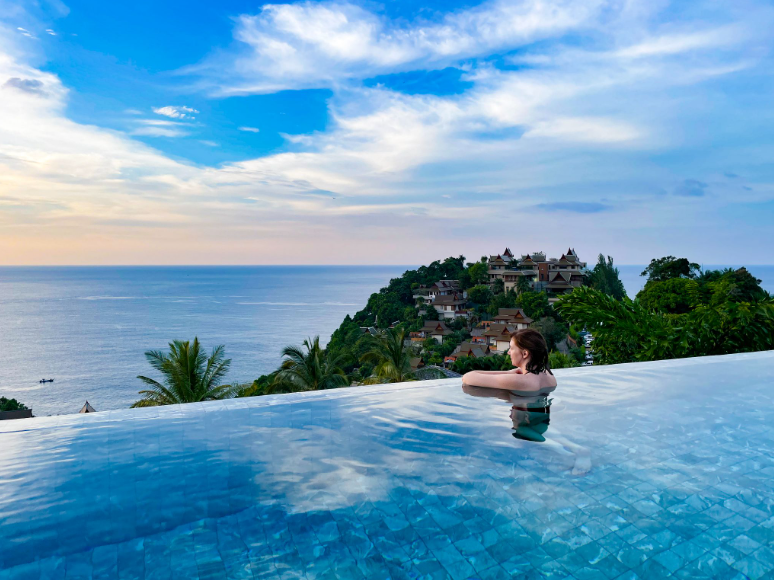
The Kamala market spans a meaningful range — from boutique condominiums within managed resort developments to the clifftop estates that define the Mile at its most exclusive.
For buyers exploring villa options along the Millionaires’ Mile corridor and Kamala’s broader villa market, Kamala villas for sale provides a curated view of current inventory across different scales — from entry-level gated pool villas to multi-bedroom cliffside estates with Andaman sea views. This segment is where the supply constraint thesis is most immediately visible: listings are sparse, and well-positioned properties rarely remain available for long.
Buyers who want to browse the full breadth of what the Kamala market offers — villas, condominiums, and mixed-use properties — across all price points can explore properties for sale in Kamala. Comparing across property types is particularly useful in a market like Kamala, where a sea-view condo within a branded resort can represent a very different yield and capital profile from a standalone villa on a leasehold plot.
For buyers whose priority is villa ownership specifically — the product category that most directly captures the Millionaires’ Mile premium positioning — villas for sale in Kamala narrows the search to that segment and allows more direct like-for-like comparison on land area, pool configuration, bedroom count, and sea view orientation.
“For value-driven investors, Kamala offers strong potential annual yields of 7–12%, boosted by new developments and a high-growth market dynamic that distinguishes it from Surin’s more stable, lower-yield profile.” — Forbes & Partners, Surin vs Kamala: 2025 Phuket Real Estate Investment Guide
The Honest Risks Worth Knowing
No market analysis is complete without the counterarguments. Kamala and the Millionaires’ Mile are strong investment cases — but not without real risk factors that deserve acknowledgement.
- Entry price and liquidity. The Millionaires’ Mile is not a liquid market. Clifftop estates at $5M–$10M+ attract a narrow buyer pool globally. Resale timelines for ultra-premium properties can run 12–24 months. Buyers need to enter with an appropriate time horizon — typically a minimum of 5–10 years for the full investment thesis to play out.
- Management dependency. A Kamala villa’s rental yield is only as good as its management team. Professional property management typically costs 20–25% of gross rental income. Skimping here compresses both yield and the property’s condition over time.
- Currency risk. The asset is priced and rents in Thai baht. A significant strengthening of the USD or EUR against the baht reduces dollar- or euro-denominated returns even if local performance holds.
- Regulatory risk. Thailand’s property ownership rules for foreigners have remained broadly stable for decades, but they are not guaranteed to remain so. Any tightening of condominium foreign quota rules or leasehold enforcement could affect the investment framework.
- Tourism concentration. While Phuket’s visitor base is diversifying, it retains meaningful dependence on a handful of source markets. A sharp, sustained reduction in European or Russian arrivals — which have been significant drivers of Phuket’s luxury segment — would affect occupancy and rental rates.
The Investment Thesis in Plain Terms
Kamala’s Millionaires’ Mile is a market where the investment case does not require forecasting or optimism — it rests on arithmetic. The land is finite. Regulations prevent dense development on what little remains. Institutional capital (Aman, InterContinental, Pontiac Land) has validated the address across four decades. Demand from an expanding global pool of high-net-worth buyers continues to grow.
The result is a price-appreciation track record (12–18% annually on villas in 2024) and a rental yield range (7–12% gross) that is difficult to find simultaneously in comparable quality markets. That combination — income-generating, capital-appreciating, and structurally supply-constrained — is what the market data describes as a defensive growth asset.
The risks are real and worth respecting: this is not a liquid market, management matters, and the ownership structures require professional guidance. For international buyers who approach it with appropriate due diligence and a medium-to-long investment horizon, the Kamala market makes a compelling case — and the supply clock is running.